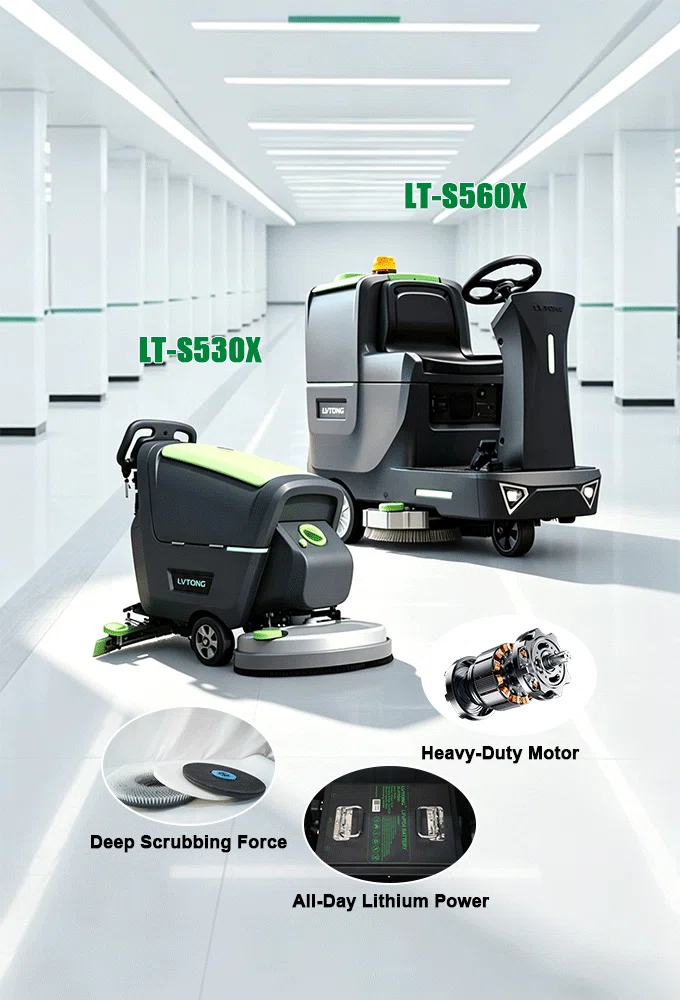
Cleaning equipment distributors need manufacturers that provide reliable machines, stable supply, technical support, and flexible cooperation. A 2024 industry survey showed that more than 70% of distributors rank product reliability and spare parts availability among their top supplier selection factors. Manufacturers with 95%+ on-time delivery rates, strong quality control systems, and responsive service teams are more likely to build long-term distributor relationships.
Cleaning equipment distributors are not only purchasing machines; they are building product lines that must perform in commercial buildings, factories, hospitals, hotels, and public facilities. A distributor’s reputation depends on whether the equipment works consistently after installation, whether replacement parts are available, and whether the manufacturer can provide support when customers need assistance.
A manufacturer that supplies floor scrubbers, vacuum cleaners, sweepers, pressure washers, and other professional cleaning equipment must understand how distributors operate. In many markets, distributors manage product demonstrations, customer training, installation, maintenance coordination, and local marketing. The manufacturer’s role extends beyond production and includes helping distributors maintain stable sales channels.
“Distributors choose manufacturers that can support their customers throughout the entire equipment lifecycle, not only during the initial purchase.”
Product quality is one of the first areas distributors evaluate. Commercial cleaning machines often operate several hours per day, sometimes 6–8 hours daily in large facilities. A machine with inconsistent performance can create service requests, replacement costs, and customer dissatisfaction.
Manufacturers need strict production controls covering motors, batteries, electronic components, pumps, brushes, and mechanical structures. According to manufacturing quality practices used across industrial equipment sectors, reducing early equipment failures within the first 12 months is strongly related to component testing and final inspection procedures.
A distributor usually looks for measurable quality indicators:
| Evaluation area | Common distributor expectation |
|---|---|
| Production consistency | Stable specifications across different production batches |
| Equipment testing | Functional inspection before shipment |
| Component quality | Reliable motors, batteries, controllers, and mechanical parts |
| Documentation | Clear operation and maintenance manuals |
Equipment reliability directly affects whether distributors can confidently recommend a product to commercial customers. Manufacturers that provide detailed testing reports, warranty terms, and maintenance guidance make it easier for distributors to introduce products into new markets.
Reliable products also require a reliable supply system. Many distributors operate with customer schedules that depend on accurate delivery dates. A delayed shipment can affect facility contracts, equipment demonstrations, and seasonal cleaning projects.
Manufacturers with organized production planning usually provide clearer lead times. In global equipment supply chains, distributors often evaluate suppliers based on delivery accuracy, inventory availability, and communication speed.
For example, a distributor supplying cleaning equipment to hotels may need dozens of machines before a new property opens. If production requires 60 days instead of the expected 35 days, the distributor may need temporary alternatives or delay customer delivery.
| Supply factor | Why distributors consider it |
|---|---|
| Production capacity | Supports larger customer orders |
| Inventory planning | Reduces waiting periods for common models |
| Shipping coordination | Helps maintain customer schedules |
| Spare parts stock | Allows faster maintenance service |
A manufacturer’s supply performance becomes especially important when distributors expand into new regions. Companies participating in programs such as the LVTONG distributor program often look for structured cooperation models that include product supply, training resources, and regional support.
Pricing remains an important part of distributor cooperation, but distributors usually evaluate total equipment cost rather than only the purchase price. A machine with a lower initial price may require more frequent repairs, additional labor hours, or earlier replacement.
Commercial customers increasingly compare equipment based on operating costs. Battery life, cleaning efficiency, maintenance intervals, and spare part prices influence the long-term cost of ownership.
A manufacturer that improves production efficiency can offer competitive pricing while maintaining product standards. This approach allows distributors to offer reasonable market prices without reducing customer confidence.
Customization is another area where distributors often need manufacturer support. Cleaning requirements vary widely between industries. A warehouse may need high-capacity equipment for large floor areas, while a hotel may require quieter machines with compact designs.
Manufacturers that provide customization options can help distributors respond to different customer requests.
Common customization services include:
-
Private labeling and packaging adjustments
-
Voltage and electrical standard changes
-
Brush or attachment options
-
Battery configuration choices
-
Product appearance modifications
A distributor serving multiple industries benefits from having access to a manufacturer that can adjust products according to local market requirements.
Technical training also influences distributor performance. Many cleaning equipment products require proper operation methods to achieve expected results. Incorrect usage can reduce cleaning efficiency and shorten equipment service life.
Manufacturers can support distributors through online training, product manuals, demonstration videos, and technical assistance. A 2023 industrial equipment market report found that suppliers providing structured training programs experienced higher distributor engagement compared with suppliers offering only product catalogs.
“Product knowledge helps distributors explain equipment features, recommend suitable models, and provide better customer service.”
After-sales support is another major area distributors evaluate before selecting manufacturers. Cleaning machines are used regularly, and customers expect quick solutions when equipment requires maintenance.
Manufacturers should maintain accessible technical support channels and sufficient spare parts availability. Important service areas include:
| Service category | Distributor requirement |
|---|---|
| Technical response | Fast answers for operational questions |
| Spare parts | Availability of commonly replaced components |
| Warranty process | Clear repair and replacement procedures |
| Maintenance support | Practical guidance for service teams |
A manufacturer that responds quickly can help distributors maintain customer relationships after the sale. Many distributors prefer suppliers that provide dedicated support contacts instead of general communication channels.
Innovation also influences distributor choices as cleaning technology continues to develop. Battery-powered equipment, automation features, improved energy efficiency, and smart monitoring systems have become more common since the early 2020s.
Manufacturers investing in product development can provide distributors with updated product lines. For example, improvements in lithium battery technology have increased operating time for many commercial cleaning machines, allowing customers to complete larger cleaning areas with fewer charging interruptions.
Environmental requirements are also becoming more important in markets such as Europe, North America, and Australia. Customers increasingly request equipment that reduces water consumption, energy use, and chemical usage.
Manufacturers that understand these market changes can help distributors introduce products that match customer expectations.
Communication quality affects long-term cooperation. Distributors need manufacturers that provide accurate information about production schedules, product updates, technical changes, and market policies.
Regular communication helps both sides plan inventory, prepare marketing materials, and respond to customer demand. Manufacturers that share product information early allow distributors more time to organize sales activities.
A strong manufacturer-distributor relationship is built through consistent product performance, dependable supply, useful training, and responsive service. These factors influence whether distributors can confidently introduce equipment to commercial customers and maintain long-term cooperation.
For cleaning equipment distributors, the best manufacturing partners are companies that provide dependable products and practical support throughout the entire cooperation process. A manufacturer that understands distributor requirements can help create stable market growth and stronger customer relationships.