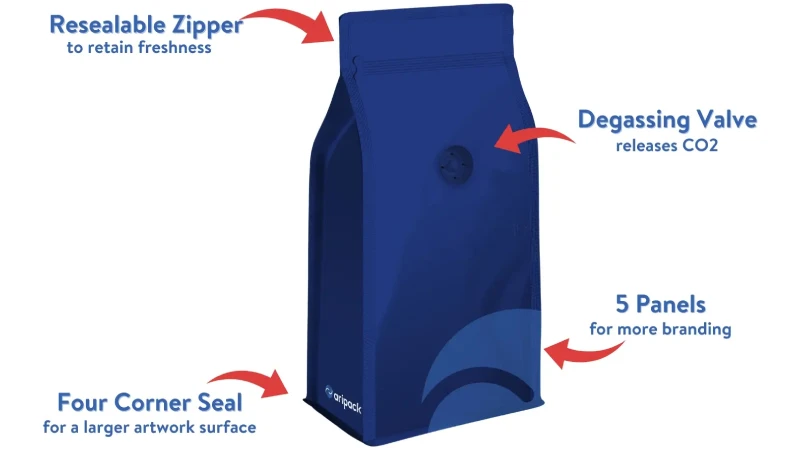
Personalized coffee packaging helps brands stand out in a market where shoppers often make buying decisions in less than 10 seconds. Research from retail merchandising shows that packaging influences more than 70% of purchasing decisions at the shelf, while branded packaging also improves product recall during repeat purchases. A custom design, premium materials, and practical features such as resealable zippers or degassing valves improve both appearance and usability. Adding sustainable materials, consistent branding, and clear product information increases customer confidence. Businesses that invest in personalized packaging create a stronger brand image across retail stores, cafés, subscription services, and online marketplaces.
Coffee is one of the world's most competitive consumer products. More than 2.25 billion cups are consumed every day, and thousands of new coffee brands enter local and online markets each year. A customer usually notices the package before reading the product description or tasting the coffee. That first impression influences how people compare products sitting side by side, which naturally leads to the role of personalized packaging.
Instead of using a standard bag with a printed label, personalized coffee packaging allows every product to reflect the brand's identity. Color palettes, typography, illustrations, finishes, and structural design all work together. According to packaging industry surveys published in 2024, over 70% of shoppers say packaging affects their perception of product quality before purchase.
A coffee bag should protect freshness while also helping customers recognize the brand within a few seconds. Both jobs happen at the same time every time the product is displayed.
Good design also supports consistency. Whether customers buy from a supermarket, an independent café, or an online store, they should recognize the same logo, colors, and visual style. Consistent branding can improve customer recall by more than 20% according to multiple retail marketing studies, making it easier for repeat buyers to locate the same product again. After recognition comes product presentation, where packaging materials also influence customer expectations.
Material selection changes how customers feel about a product before opening it. Matte finishes create a different impression than glossy films, while textured paper offers another experience. High-barrier laminated films help preserve aroma by reducing oxygen and moisture exposure. Many specialty roasters also use one-way degassing valves because freshly roasted coffee continues releasing carbon dioxide for several days after roasting.
Packaging shape also affects both presentation and storage. Many premium brands now choose flat bottom packaging because the structure stands upright on shelves, provides more printable surface area, and improves shelf organization. Compared with traditional pillow bags, flat-bottom styles usually offer better stability during shipping and retail display, particularly for 250 g, 500 g, and 1 kg coffee products.
Functional details matter just as much as appearance. Resealable zippers allow customers to close the bag after each use, while easy-tear notches improve convenience without additional tools. Clear roast level indicators, brewing recommendations, grind size information, and roast dates reduce confusion for first-time buyers. In a 2023 consumer packaging survey, more than 60% of respondents preferred products with packaging that provided practical information rather than decorative graphics alone.
As packaging becomes more informative, it also becomes a communication channel. Many coffee companies print QR codes that lead customers to brewing guides, farm information, roasting videos, or subscription pages. This approach connects the physical package with digital content without increasing package size. Limited seasonal artwork, numbered small-batch releases, and producer stories also encourage customers to share products on social media, where attractive packaging often appears naturally in user-generated photos.
Environmental considerations have also become part of purchasing decisions. According to international consumer surveys published between 2023 and 2025, more than 50% of shoppers say recyclable or lower-impact packaging influences at least some of their buying choices. Coffee companies increasingly use recyclable mono-material films, water-based inks, FSC-certified paper, and packaging designed with less material while maintaining barrier performance. Many brands explain these choices directly on the package to help customers understand disposal instructions.
Different sales channels require different packaging priorities. Retail shelves compete for attention against dozens of nearby products, while e-commerce depends on product photography and customer reviews. Subscription businesses often focus on a memorable unboxing experience because customers receive shipments every month. Although the environments differ, maintaining the same visual identity across every channel helps customers recognize the brand regardless of where they purchase it.
For businesses introducing new blends, personalized packaging also simplifies product organization. Color coding, origin maps, tasting notes, roast profiles, and brewing icons allow customers to compare products quickly without changing the overall brand appearance. Seasonal editions, holiday collections, and limited releases can receive unique graphics while still matching the company's established design system.
A successful coffee package combines appearance, protection, convenience, and clear communication. Strong branding attracts attention, quality materials preserve freshness, practical features improve everyday use, and consistent design helps customers remember the product over time. When these elements work together, packaging becomes part of the customer experience from the first purchase through every cup brewed afterward.